
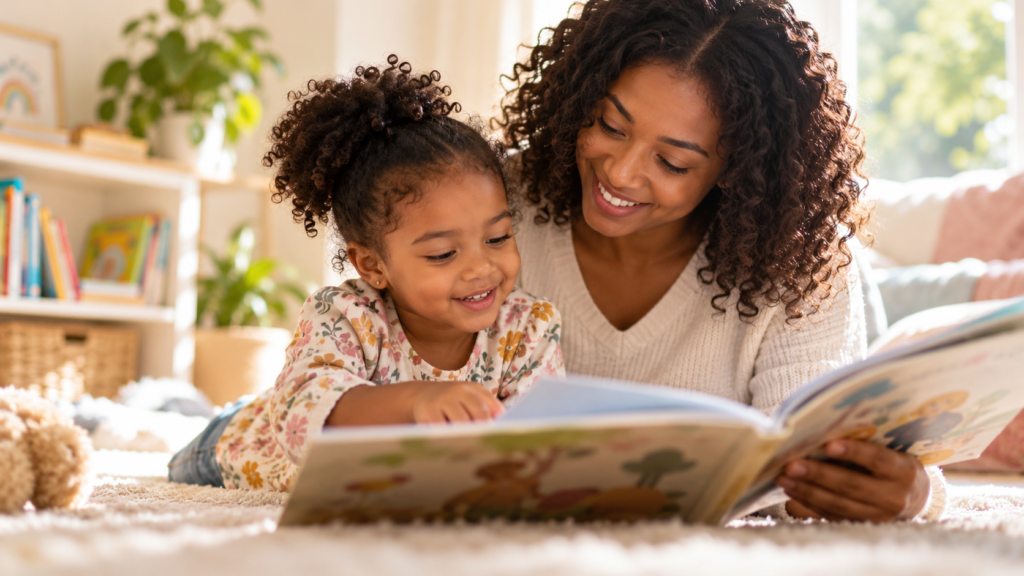
Nurturing personalities, beautiful possibilities.
Have you ever watched a young child discover something for the very first time?
Perhaps it is the excitement of stacking blocks without having them tumble over, the joy of recognizing a familiar word in a favourite story, or the determination to put on their own shoes.
To an adult, these moments may seem ordinary. To a young child, they are opportunities to explore, learn, and make sense of the world.
At Sage Children’s Foundation, we believe that every child deserves a beginning filled with curiosity, connection, and opportunities to thrive.
The first five years of life are an especially important period of growth and development. During these early years, children build foundational skills that support how they communicate, form relationships, solve problems, regulate emotions, and approach learning.
But meaningful early childhood education is not about rushing children toward academic achievement. It is about creating nurturing environments where learning happens naturally, joyfully, and at each child’s own pace.
The Early Years: A Foundation for Lifelong Learning
From birth, children are constantly learning.
They learn through the voices they hear, the faces they recognize, the objects they touch, and the relationships they experience.
During the first five years, the brain undergoes remarkable development. Early experiences help shape developing neural connections involved in language, movement, emotional regulation, attention, and other emerging abilities.
These experiences are influenced by a combination of biological development, relationships, opportunities, and the environments in which children grow.
For example, when a caregiver responds to a baby’s sounds, they are doing more than having a simple interaction. They are participating in a back-and-forth exchange that can support early communication and social connection.
When a toddler explores different shapes, sizes, and textures, they begin developing concepts that contribute to problem-solving and early mathematical thinking.
And when a preschooler participates in imaginative play, they have opportunities to practice communication, creativity, cooperation, and flexible thinking.
These everyday experiences remind us that learning does not begin when a child enters a classroom.
Learning begins through connection, exploration, and everyday life.
Learning Through Play: Where Curiosity Comes Alive
For young children, play is not simply a break from learning. It is one of the ways learning takes place.
A child building a tower may be exploring balance, size, and cause and effect.
A child pretending to run a grocery store may be practicing communication, counting, imagination, and social interaction.
A child painting with their fingers may be discovering colours, textures, and new ways to express themselves.
Play provides opportunities for children to experiment, make choices, encounter challenges, and discover what interests them.
Importantly, play does not have to be expensive or elaborate.
A cardboard box can become a spaceship. A collection of leaves can inspire counting and sorting. A familiar song can encourage movement, memory, and connection.
What matters is not the price of the materials but the opportunities children have to engage, explore, and participate.
At Sage, we believe early learning should make room for wonder, imagination, and joy.
Every Child Learns Differently
While the first five years are important, no two children experience development in exactly the same way.
Some children communicate readily through words. Others may communicate through gestures, expressions, pictures, or assistive communication tools.
Some children enjoy active exploration, while others prefer observing before joining an activity.
Children also have different developmental strengths, interests, abilities, and support needs.
Inclusive early childhood education recognizes these differences and responds with flexibility, understanding, and appropriate support.
Rather than expecting every child to learn in the same way or at the same pace, we can ask:
- What interests this child?
- How does this child communicate and participate?
- What strengths can we build upon?
- What changes might make learning more accessible?
- How can we create opportunities for this child to experience belonging and success?
When developmental concerns arise, families should have access to appropriate information, professional guidance, and timely support without unnecessary judgment or stigma.
Every child deserves to be seen as a learner with possibilities.
Families Are a Child’s First Learning Partners
Early childhood education creates meaningful opportunity for children to learn and explore..
Families play an important role in children’s earliest learning experiences, often long before formal educational services begin.
Everyday routines can become meaningful learning opportunities.
Preparing a meal together can introduce counting, colours, and new vocabulary.
Reading a bedtime story can create opportunities for language development, imagination, and connection.
A walk through the neighbourhood can inspire conversations about nature, shapes, sounds, and the world around us.
Even simple moments of listening, responding, and showing interest in a child’s discoveries can support learning.
However, caregivers should not feel that every interaction must become a structured educational activity.
Children also benefit from unhurried time, rest, relationships, and opportunities to play freely.
Families have different schedules, resources, circumstances, and support needs. Meaningful early learning should be accessible and realistic within those differences.
Supporting children’s education therefore means supporting the people who care for them.
When caregivers have access to practical information, encouragement, and community resources, they may be better equipped to create learning opportunities that work for their families.
Why Access to Early Childhood Education Matters
A child’s opportunities to learn are influenced not only by family experiences but also by the environments and resources available to them.
Access to quality early childhood education can be affected by affordability, location, availability of programs, disability-related barriers, language, transportation, and other circumstances.
For some families, finding an inclusive early learning environment can be challenging.
Others may have limited access to educational materials, childcare options, or appropriate developmental supports.
These challenges highlight an important reality:
A child’s opportunity to learn should not depend solely on a family’s ability to overcome systemic barriers.
Creating meaningful educational opportunities requires collaboration among families, educators, communities, nonprofit organizations, and policymakers.
Children benefit from environments that are safe, responsive, inclusive, developmentally appropriate, and rich in opportunities for exploration and connection.
Investing in Early Learning, Investing in Possibilities
At Sage Children’s Foundation, our commitment to early childhood education is grounded in the belief that meaningful opportunities during the early years can help create stronger foundations for children’s futures.
As a venture philanthropic organization, our vision is to support innovative, inclusive, and sustainable approaches to early childhood education.
This means looking beyond short-term assistance toward opportunities to develop promising initiatives, build strategic partnerships, and strengthen access to educational resources.
We believe that investing in early learning should also recognize the role of families and communities.
An educational resource can help a caregiver support learning at home.
An inclusive learning program can create opportunities for a child who might otherwise face barriers to participation.
A community partnership can help connect families with resources that would be difficult to access independently.
These are examples of the kinds of opportunities that thoughtful philanthropic investment can help make possible.
Our aspiration is to contribute to an early childhood education landscape where more children have the support, resources, and opportunities they need to learn and thrive.
Five Simple Ways to Nurture Early Learning
Meaningful learning does not always require a formal lesson plan.
Here are five practical ways families can encourage learning in everyday life.
1. Make time for shared reading.
Explore picture books, talk about illustrations, ask simple questions, and allow children to choose stories that interest them. Adapt the experience to their communication preferences and developmental needs.
2. Encourage curiosity.
When children ask questions, explore the answers together. Sometimes, wondering aloud and discovering something new can be more valuable than immediately providing an explanation.
3. Create opportunities for play.
Offer safe, age-appropriate materials for building, pretending, sorting, drawing, and exploring. Allow children opportunities to lead their own play.
4. Include children in everyday activities.
Simple routines such as setting the table, sorting laundry, watering plants, or preparing snacks can create opportunities to practice communication, problem-solving, and emerging independence.
5. Celebrate effort and discovery.
Recognize children’s curiosity, persistence, and willingness to try. Learning involves exploration, repetition, mistakes, and new attempts—not just getting something right.
These activities can be adapted to different ages, abilities, interests, and family circumstances.
A Beginning Filled With Possibilities
The first five years matter because they offer countless opportunities for children to build relationships, discover their abilities, and develop foundational skills.
But these years are not a deadline for learning or development.
Children continue to learn and grow throughout life, and those who need additional support deserve meaningful opportunities at every stage.
Our responsibility as families, educators, communities, and philanthropic partners is to help create environments where children feel valued, included, and encouraged.
At Sage Children’s Foundation, we believe that supporting early childhood education is about more than preparing children for school.
It is about nurturing curiosity, strengthening families, expanding opportunity, and creating possibilities for the future.
Because every little beginning deserves care.
And every child deserves the opportunity to thrive.
Supporting children, empowering families.
Sage Children’s Foundation is a venture philanthropic organization focused on advancing early childhood education through inclusive learning opportunities, family empowerment, and strategic partnerships.
Join the conversation: What is one small moment of learning or discovery that has brought joy to a child in your life?
References
Harvard Center on the Developing Child — Early brain development and responsive relationships.
UNICEF: Early Childhood Development — Nurturing care, development, and equitable opportunities.
NAEYC: Developmentally Appropriate Practice — Play-based learning, individual differences, and inclusive early childhood education.
